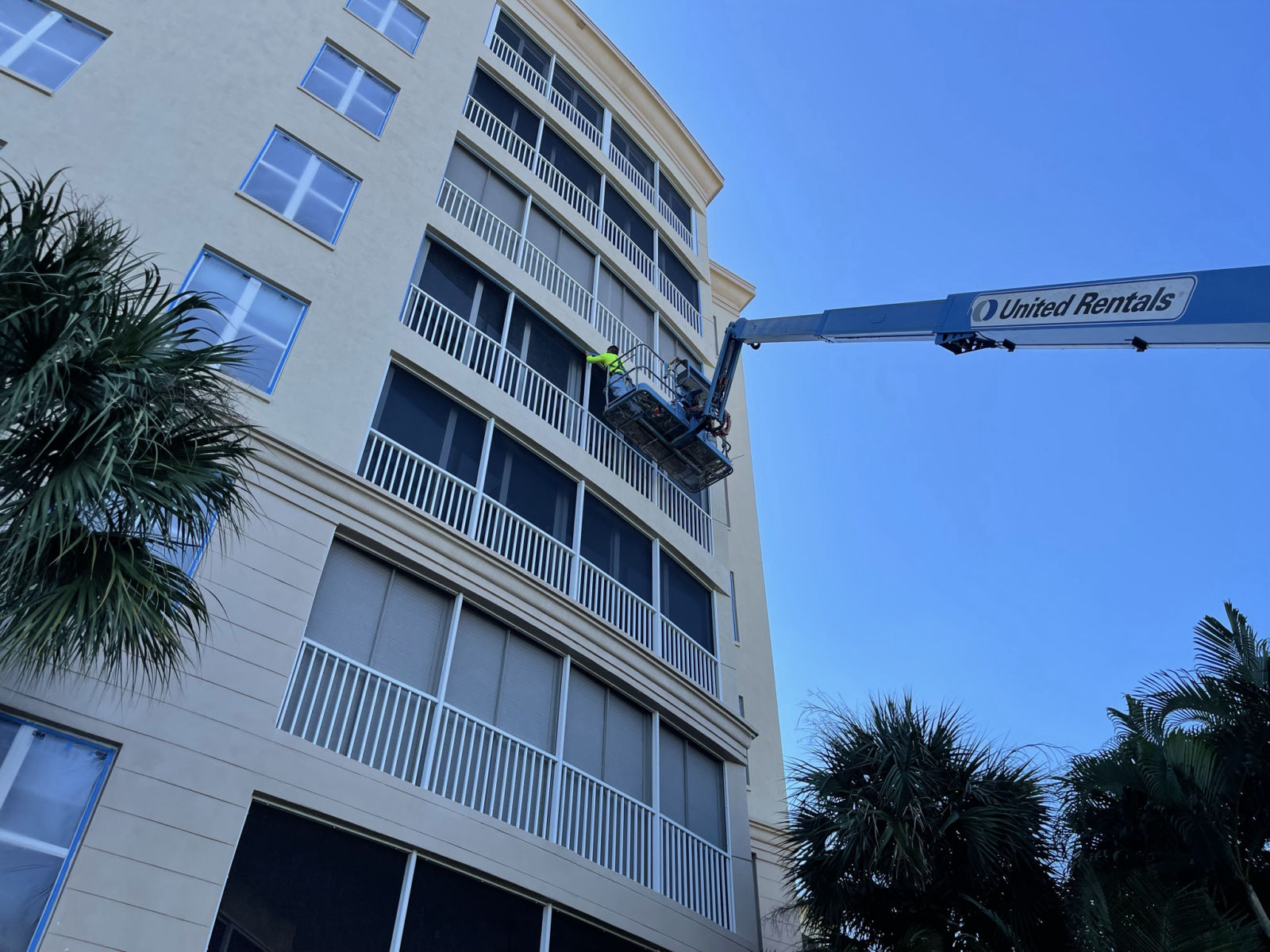
A quality Florida exterior should give you many years of service — but the gap between "aged gracefully" and "needs repainting early" is mostly habits that cost almost nothing. This is the maintenance advice we give every client at the final walkthrough, written down.
The once-a-year walkaround (20 minutes)
Pick a date you'll remember — we suggest the end of hurricane season, November 30 — and walk the full perimeter looking for:
- Cracked or brittle caulk around windows, doors, and expansion joints. Sealants fail years before paint does, and every failed joint is a water entry.
- Bubbling or lifting paint, especially low on walls and at slab edges — that's moisture moving through the wall, not a paint defect.
- Rust-colored staining on stucco, soffits, or balcony edges. On concrete buildings this can be early spalling — the earlier it's caught, the smaller the repair.
- White mineral streaks (efflorescence) — water is passing through the masonry and leaving salts behind.
- Hairline stucco cracks that have opened wide enough to catch a fingernail.
- New interior water marks on ceilings or around window frames after heavy rain.
Five habits that add years
- Aim the sprinklers at the grass. Irrigation water carries minerals and keeps walls wet. The most common premature failure we see in SWFL is the "sprinkler stripe" — a band of stained, blistered paint exactly where a head hits the wall twice a day.
- Soft-wash the mildew, gently. North-facing and shaded walls grow mildew here. A low-pressure rinse with a house-wash solution once a year keeps it from rooting into the coating. Don't blast it — high pressure in untrained hands opens caulk joints and drives water in.
- Trim plants off the walls. Foliage holds moisture against the coating and scratches it in wind. A hand's width of air gap is enough.
- Keep gutters and downspouts moving. Overflow sheets down the wall, staining the paint and soaking the slab edge.
- Touch up with the leftover paint. We leave labeled paint at the end of every job for a reason — a dab on a chip today beats a primer-and-patch repair after a wet season.
For boards and property managers
Scale the same walkaround into an annual envelope review: sealant joints, deck coatings, and slab edges, documented with photos year over year. Communities that inspect annually repaint on schedule and restore small; communities that don't inspect get their timeline set for them by the damage. Our repaint-cycle guide covers how this feeds reserve planning.
Want a professional set of eyes on it? Request a free assessment or call (239) 772-1302 — same-day response.